Some of you have probably been following Effemigate—the latest controversy to follow Seattle Pastor Mark Driscoll. The timeline looks like this: a couple weeks ago Driscoll posted something on Facebook about effeminate worship leaders. Christian blogger Rachel Held Evans called Driscoll a bully. Over at the World blog, Anthony Bradley criticized Evans’ comments as libel. Even Brian McLaren added his two cents with a predictable morality tale about two kinds of “evangelicals.” In a subsequent post Driscoll called his Facebook line “a flippant comment.” He reports that his executive elders sat him down and challenged him “to do better by hitting real issues with real content in a real context.” This is wise counsel. Driscoll’s Facebook comment was bound to create more heat than light. It was an unwise way to talk about a serious issue.
I don’t need to say anything more about the controversy itself. Like most web-storms, this one will blow over quickly. But the issues under the issue (as Driscoll puts it) are important and worth considering.To that end, let me suggest three general principles that should guide our discussion of biblical manhood. READ MORE
Wednesday, October 12, 2011
Sunday, September 25, 2011
What Breed of Man Are You?
What Breed of Man Are You? We need a new breed of men who will say "no" to more bucks when it means sacrificing their families. by Dennis Rainey
A motto I heard recently goes like this: Winners concentrate on winning, while losers concentrate on just getting by.
If that statement were carved into the granite at the front of a Fortune 500 company, you would nod your head in agreement. Inwardly you might say, "Now that's the way to run a business. I would imagine that company is really a company of excellence. They know how to do things right!"
Yet when it comes to the family, it's interesting that most homes today have to be characterized as losers. Too many marriages have become marred by mediocrity. Children are seen, at best, as a status symbol—a way to achieve something through them that we, ourselves, weren't able to achieve when we were their age.
Too many marriages today are concentrating on "just getting by." With "squeaking by" as the goal, it is no wonder so many marriages don't amount to much.
Denis Waitley in his best seller, The Seeds of Greatness, tells the story of his grandmother whom he idolized. She crossed an apricot and a plum tree. Grandmother Waitley called it a plumcot. This delicious fruit was perfected by the gentle, wise old lady after careful and tedious pruning and grafting of the two fruit-bearing trees.
As a boy, Denis learned a valuable lesson from his grandmother. She harvested a plumcot because that was what she planted.
What You Plant is What You Get
Marriage is a lot like that—we never get out of a marriage what we do not put into it.
One man confessed, "At work I concentrate on winning, and as a result, I am a winner. At home, however, I concentrate on just getting by."
It's no wonder he is losing.
As Americans, we think of ourselves as winners … we are used to winning, but too many times in the wrong places. As a result, we end up losing in the important places … at home.
Vance Havner has said, "Americans know the price of everything, but the value of nothing."
If a business goes bankrupt, it is the president or the chairman of the board who is to blame. Similarly, if the home fails, you and I are to blame. You and I, as husbands and fathers of our family, must master the ageless art of leadership and apply it to our families. If we ever hope to win at home, then we must focus on winning.
Spinning Plates
Too many of us, as the leaders of our families, are like the man who used to come on the "Ed Sullivan Show" years ago and spin the plates. This man would start at one end of a long table by placing a stick perpendicular to the table and spinning a plate on the stick. In consecutive order the plates would be placed … two, three, four, five, six plates. As the first plate slowed down, it would begin to wobble. I can remember denying the urge to want to jump through the TV and run to help the man by grabbing the plate before it fell off the stick and shattered into tiny slivers of porcelain pieces.
Now with the first plate wobbling in a near fatal orbit, the man would rush back and expertly spin that plate again as the audience breathed a sigh of relief. On he would go … seven, eight, nine. By that time, plates two, three, and four were now beginning to wobble. And just before you knew the man could not keep a dozen or so plates spinning, he would quickly scoop them up in his professional hands like he was carrying them to the cupboard and bow to the smiling applause of the audience.
Similarly, the roles we assume in life as a husband, a father, a businessman, a civic leader, a church leader, a golfer, a fisherman, all represent different plates in our lives. We begin spinning them early in our married life with plate number one being our marriage. Giving focused attention to that one place, the plate spins along merrily and does well. With the addition of plates number two (business) and three (children), efforts to focus become more difficult. Carefully we keep adding our plates until we finally step back from the table to see two or three of the first plates beginning to wobble badly. We have to make choices. Decisions. Decisions based upon priorities. Our family has needs, but we mistakenly choose to meet hose "material" needs by applying our efforts primarily to our business. The result … focus is lost.
However, most businessmen are not worried about starving. Most of us are concerned about status, significance, accumulation of more, and how they can feed the materialistic monster that lives within us. A good friend recently said, "Materialism is not what you have, it is what has you."
Too many husbands and fathers have become dizzy by the many spinning plates we have set up. We give our family an occasional spin just to keep things at "status quo." We focus on just getting by. The results? More plates begin to fall off the table. Children become strangers—children who are crying out for attention.
Mothers plead for help. Meanwhile, being the visionary leaders that we are, we ignore fallen plates and add additional plates. Yet the Psalmist warns, "Unless the Lord build the house, they labor in vain who build it."
There is no question why so many marriages and families are functioning poorly. Nothing that is alive such as a business, a school, a basketball team, or a family can function without leadership, energy, time, and most importantly, focused attention. Without these, the plates will begin to fall.
Being somewhat of a selfish man myself, there is nothing I would love better than to have my dozen ego-stroking plates spinning in addition to my family plates. However, I am constantly forced by the person of Jesus Christ to come to grips with my limits. I have been wrestled to the ground by Him on more than one occasion to be forced to answer the question, "How many plates can you keep spinning and still win?"
Another question which redirects me is, "Where do I want to win so badly that I am unequivocally unwilling to lose?"
"Which of those plates would I be willing to lose for the sake of my family, if need be?"
A New Breed
Today some tough questions face Christian businessmen and leaders. We have become a cult of Christian celebrities. We worship successful businessmen and pro athletes who can perform in the office or on the field. We pay little regard for whether they are a success in their personal and private lives. The time has come for a new breed of Christian husbands and fathers.
We need a new breed that will say "no" to more bucks when it means sacrificing their families. A new breed who will place a family grid between them and every decision that they make. A new grid of, "How will this affect my family?" A new breed who will determine how much is enough. We need a breed of men that will seek to establish relationships with their families before seeking fame in their culture. A new breed who will recognize that they need to leave something to posterity that will outlive them … proven character in their children. A new breed of leaders who realize that to succeed in the eyes of men, but fail in the eyes of God, is the ultimate waste.
One man has said, "It is better to fail in a cause that will ultimately succeed than to succeed in a cause that will ultimately fail."
One last question—will you take upon yourself the challenge that Albert Einstein gave a group of young scientists? While addressing this highly motivated group of young men, he pointed to them and said, "Gentlemen, try not to become men of success. But rather, try to become men of value."
A motto I heard recently goes like this: Winners concentrate on winning, while losers concentrate on just getting by.
If that statement were carved into the granite at the front of a Fortune 500 company, you would nod your head in agreement. Inwardly you might say, "Now that's the way to run a business. I would imagine that company is really a company of excellence. They know how to do things right!"
Yet when it comes to the family, it's interesting that most homes today have to be characterized as losers. Too many marriages have become marred by mediocrity. Children are seen, at best, as a status symbol—a way to achieve something through them that we, ourselves, weren't able to achieve when we were their age.
Too many marriages today are concentrating on "just getting by." With "squeaking by" as the goal, it is no wonder so many marriages don't amount to much.
Denis Waitley in his best seller, The Seeds of Greatness, tells the story of his grandmother whom he idolized. She crossed an apricot and a plum tree. Grandmother Waitley called it a plumcot. This delicious fruit was perfected by the gentle, wise old lady after careful and tedious pruning and grafting of the two fruit-bearing trees.
As a boy, Denis learned a valuable lesson from his grandmother. She harvested a plumcot because that was what she planted.
What You Plant is What You Get
Marriage is a lot like that—we never get out of a marriage what we do not put into it.
One man confessed, "At work I concentrate on winning, and as a result, I am a winner. At home, however, I concentrate on just getting by."
It's no wonder he is losing.
As Americans, we think of ourselves as winners … we are used to winning, but too many times in the wrong places. As a result, we end up losing in the important places … at home.
Vance Havner has said, "Americans know the price of everything, but the value of nothing."
If a business goes bankrupt, it is the president or the chairman of the board who is to blame. Similarly, if the home fails, you and I are to blame. You and I, as husbands and fathers of our family, must master the ageless art of leadership and apply it to our families. If we ever hope to win at home, then we must focus on winning.
Spinning Plates
Too many of us, as the leaders of our families, are like the man who used to come on the "Ed Sullivan Show" years ago and spin the plates. This man would start at one end of a long table by placing a stick perpendicular to the table and spinning a plate on the stick. In consecutive order the plates would be placed … two, three, four, five, six plates. As the first plate slowed down, it would begin to wobble. I can remember denying the urge to want to jump through the TV and run to help the man by grabbing the plate before it fell off the stick and shattered into tiny slivers of porcelain pieces.
Now with the first plate wobbling in a near fatal orbit, the man would rush back and expertly spin that plate again as the audience breathed a sigh of relief. On he would go … seven, eight, nine. By that time, plates two, three, and four were now beginning to wobble. And just before you knew the man could not keep a dozen or so plates spinning, he would quickly scoop them up in his professional hands like he was carrying them to the cupboard and bow to the smiling applause of the audience.
Similarly, the roles we assume in life as a husband, a father, a businessman, a civic leader, a church leader, a golfer, a fisherman, all represent different plates in our lives. We begin spinning them early in our married life with plate number one being our marriage. Giving focused attention to that one place, the plate spins along merrily and does well. With the addition of plates number two (business) and three (children), efforts to focus become more difficult. Carefully we keep adding our plates until we finally step back from the table to see two or three of the first plates beginning to wobble badly. We have to make choices. Decisions. Decisions based upon priorities. Our family has needs, but we mistakenly choose to meet hose "material" needs by applying our efforts primarily to our business. The result … focus is lost.
However, most businessmen are not worried about starving. Most of us are concerned about status, significance, accumulation of more, and how they can feed the materialistic monster that lives within us. A good friend recently said, "Materialism is not what you have, it is what has you."
Too many husbands and fathers have become dizzy by the many spinning plates we have set up. We give our family an occasional spin just to keep things at "status quo." We focus on just getting by. The results? More plates begin to fall off the table. Children become strangers—children who are crying out for attention.
Mothers plead for help. Meanwhile, being the visionary leaders that we are, we ignore fallen plates and add additional plates. Yet the Psalmist warns, "Unless the Lord build the house, they labor in vain who build it."
There is no question why so many marriages and families are functioning poorly. Nothing that is alive such as a business, a school, a basketball team, or a family can function without leadership, energy, time, and most importantly, focused attention. Without these, the plates will begin to fall.
Being somewhat of a selfish man myself, there is nothing I would love better than to have my dozen ego-stroking plates spinning in addition to my family plates. However, I am constantly forced by the person of Jesus Christ to come to grips with my limits. I have been wrestled to the ground by Him on more than one occasion to be forced to answer the question, "How many plates can you keep spinning and still win?"
Another question which redirects me is, "Where do I want to win so badly that I am unequivocally unwilling to lose?"
"Which of those plates would I be willing to lose for the sake of my family, if need be?"
A New Breed
Today some tough questions face Christian businessmen and leaders. We have become a cult of Christian celebrities. We worship successful businessmen and pro athletes who can perform in the office or on the field. We pay little regard for whether they are a success in their personal and private lives. The time has come for a new breed of Christian husbands and fathers.
We need a new breed that will say "no" to more bucks when it means sacrificing their families. A new breed who will place a family grid between them and every decision that they make. A new grid of, "How will this affect my family?" A new breed who will determine how much is enough. We need a breed of men that will seek to establish relationships with their families before seeking fame in their culture. A new breed who will recognize that they need to leave something to posterity that will outlive them … proven character in their children. A new breed of leaders who realize that to succeed in the eyes of men, but fail in the eyes of God, is the ultimate waste.
One man has said, "It is better to fail in a cause that will ultimately succeed than to succeed in a cause that will ultimately fail."
One last question—will you take upon yourself the challenge that Albert Einstein gave a group of young scientists? While addressing this highly motivated group of young men, he pointed to them and said, "Gentlemen, try not to become men of success. But rather, try to become men of value."
Friday, September 23, 2011
A Generation of Heroes
Satan watches for those vessels that sail without a convoy,” wrote Puritan pastor George Swinnock (1627–1673). Every individual knows he was created for community. Isolation is the Devil’s playground, and our Enemy is on the lookout for the Christian who thinks he can stand alone in independent isolation from the fellowship, accountability, and encouragement of faithful brothers and sisters.
Before the fall of man, even though the Lord God walked in close communion with Adam in the garden, our gracious and triune God knew it was not good for man to be alone (Gen. 2:18), and so God created someone who would meet Adam’s needs and relate to Adam in a way that, by design, God Himself did not. In His often-overlooked grace, God blessed mankind with the most beautiful, intimate, and joyous relationship that exists between mere human beings: holy wedlock between a man and a woman, who by design and covenant become one flesh. Nevertheless, even from that glorious union, He called them to multiply themselves into communities of families that would populate and dominate creation to share life and glorify God together.
God gave each of us an insatiable hunger to experience life together — life’s joys and passions and life’s sorrows and burdens. Men need men, and women need women. Younger men and women need to listen to and learn from the wisdom and experiences of older men and women. Older men and women need the passion and patience to sit down and tell their stories and lessons to the next generation. Women need authentic relationships with other women to form the enduring companionship of sisterhood that not only detests divisive gossip and grudges but defends, encourages, and bears the burdens of every woman so that no woman is left alone to fend for herself in serving the Lord in her many callings.
Even though many men are completely content with the community and companionship of images, games, and voices on a screen, men desperately need the camaraderie and fraternity of other men. Men are made to experience intimate and authentic, loyal and enduring friendships with other men — on the battlefield, in the foxhole, at the gates of the city, and at the coffee shop on the corner. And while no wise and truly humble man will ever consider himself a hero, each and every man of God by His grace is called to strive to conquer this world, his flesh, and the Devil, shoulder to shoulder with other men who together serve one another in a company of heroes as husbands and dads who serve by leading their wives, families, churches, and communities into fellowship with God.
By Burk Parsons is editor of Tabletalk magazine and associate minister at Saint Andrew’s in Sanford, Florida
Saturday, September 10, 2011
Honoring the Legacy of a 9-11 Rescuer
This September 11 marks nine years since evil men turned airplanes into flying bombs and murdered 2,976 people in New York City, Washington DC and Shankstown Pennsylvania.
We all can recall where we were that day when we heard the news. Those incredible images remain etched in our minds. Evil spread its wings before the world that day but courage was also unfurled before us as we witnessed the fraternity of men at its best. When the lives of others were at stake, those heroes of 9/11 rushed the stairways and mounted the rubble to rescue them.
403 firemen, paramedics and policemen sacrificed themselves in a grand rescue mission at Ground Zero. There are so many remarkable stories of heroism that day but there’s one in particular that lingers over me to this day
In those final moments before the collapse of the Twin Towers, when people in them were doing all they could to save themselves, there was a mysterious young man who stepped out of the smoke and chaos. He wasn’t a fireman or a rescuer worker but just a regular guy who chose to put the wellbeing of others before his own.
The survivors didn’t know their rescuer’s name that horrible day, but they did remember this about him: he wore a red bandanna around his mouth and nose.
Tuesday, September 6, 2011
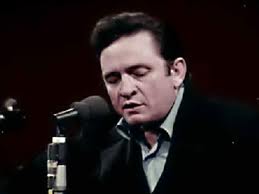
Hyper-Masculinity and A Boy Named Sue by Johnny Cash
What does "A Boy Named Sue" have do with biblical manhood and fatherhood? Russell Moore, Dean of the School of Theology and Senior Vice-President for Academic Administration at The Southern Baptist Theological Seminary, says:
“If you can understand what’s going on when Johnny Cash sings this song from the point of view of a young boy who has been abandoned by his dad who is given a name that with emasculates him, then you can understand what is really going on in a lot of the conversations that we’re having in our culture, and a lot of the conversations we’re having in our churches, when it comes to masculinity.” Moore goes on to argue that we need to define masculinity in terms of Jesus Christ, and not the other way around.
You can listen to the Moore's excellent podcast here.
Sunday, September 4, 2011
The Her.meneutics Gender Debates
From Her.meneutics – The Christianity Today Blog for Women (http://blog.christianitytoday.com/women/)
We talk to theologian Russell Moore about Bachmann, the divorce culture, and why a feminist reading of Scripture would often be easier than a complementarian one.
Interview by Rachel Stone
Yesterday on the blog, we heard from theologian William Webb, an egalitarian who says the Bible's "redemptive movement" shows that because of Christ, women are more, not less, free to exercise gifts in church ministry and beyond. Today we hear from popular pastor and blogger Russell Moore, dean of the School of Theology at the Southern Baptist Theological Seminary, and, as of today, the board chairman of the Council on Biblical Manhood and Womanhood. Moore says that headship in marriage actually empowers women, and that complementarians and egalitarians can find common ground around fighting a pornographic culture that reduces women to sexualized bodies.
Many evangelicals who would elect Sarah Palin or Michele Bachmann for President wouldn’t attend a church with a female pastor. Is there a contradiction here?
On the face of it, there is no contradiction since Scripture teaches that the church, not the world, is presently the outpost of the new creation. The state in this age doesn’t — and can’t — reflect God’s kingdom purposes in the way that the church or a family can.
I would gladly vote for someone to be my president who disagrees with me on whether or not infants can be baptized. I wouldn’t want that same person to be my pastor, because we will have to decide together who and how to baptize. The Kuyperian principle of “sphere sovereignty” is helpful here.
On the other hand, that’s the ideal and, very often, not the reality. Unfortunately, American evangelicals have too often longed for a secular authority to serve as a spiritual leader, and political professionals have been all too willing to exploit this by teaching candidates to parrot evangelical-sounding phrases and “testimonies.” In such cases, political leaders become totem-like for evangelicals. An attack on a candidate who identifies with “us” is an attack on “us” or, worse, on Jesus. That’s unhealthy, regardless of whether the politician is male or female.
In the case of evangelical over-identification with political partisanship, though, there can be a subtle shifting in what it means to define a woman’s life, or a man’s, as a “success.” There is quite a bit of inconsistency in evangelical complementarians talking about a “gentle and quiet spirit” while cheering Ann Coulter’s latest sarcastic barbs.
Lots of evangelicals, such as William Webb, take the Bible seriously and are still comfortable seeing a woman in the pulpit. What about you?
I don’t think the issue is one of comfort — there are many women I would love to hear preach, and who are much better Bible scholars and communicators than any man I know. But the issue is whether the Scripture’s qualifications for this office (1 Tim. 2 and others) are normative.
There are some so-called “complementarian” Christians, I’m sure, who hold the position simply because they have never seen anyone but a man in the pulpit, and just find anything else odd and disquieting.
I have never met a convictional complementarian, though, who holds that position out of reflexive comfort. For most of us, the Scripture is pulling us in the other direction from our comfort. It would be much easier, especially for those us under 40, to embrace a more feminist stance here and elsewhere.
Complementarians sometimes say that a feminist or egalitarian reading of the Bible owes more to our own cultural prejudices than to a faithful reading of Scripture. Is this true?
I do not believe that egalitarian Christians are evil, Bible-destructing people. Most of them are trying to reconcile some things they find in Scripture (Jesus’ affirmation of women, for instance) with others that seem to contradict these (the teachings of Paul and Peter on the church and family, for instance).
I do think there’s a tendency for all of us to read the Scripture around our own “plausibility structures.” Paul obviously can’t mean that women aren’t to teach men, we conclude, because the very idea seems absurd, so he must mean something else. I think that’s a mistake.
This is not unique to egalitarians by any means. For example, American Christians have a great deal of difficulty hearing Jesus and his apostles on issues of wealth and poverty. We seek to make Bible elastic enough to allow us to pursue our dollars and follow Jesus simultaneously.
When complementarians argue that we shouldn’t conform the Bible to our cultural expectations, we are not saying that this is unique to egalitarianism. We’re saying, across the board, that we should let the Bible be as countercultural as it is.
The Council on Biblical Manhood and Womanhood claims that evangelical feminism has caused a "tragic loss of the beauty of manhood and womanhood as created by God." What would you consider an example of this?
I think this is one area where complementarians and feminists can find common ground. The pornographic “revolution” has not empowered women but the men objectifying them. The abortion-rights “revolution” has not empowered women but sexually predatory men. Women and children are the first hurt by the kind of unaccountable divorce culture we have allowed to be cultivated in our culture and our churches.
Moreover, in Christian circles, there is often a diminishing of the value of the unique contribution of women to the church and to the home. What is implied is that a woman’s gifting is only valued if it is the same as that of a man.
What complementarianism contributes to this discussion is to say that where there is a loss of self-sacrificial, other-protective male leadership, the result is not equality but the worst form of patriarchy. In the Bible, headship is not dictatorship, but instead the responsibility to sacrifice oneself for another (Eph. 5:25-30). In a Christian view of reality, women’s value is not determined by her sexual attractiveness or availability to men. A truly complementarian Christianity will value the full spectrum of gifts, and the cooperative economy that God brings about through the distinctions between women and men as well as through their commonalities.
Thank you, Dr. Moore!
Saturday, September 3, 2011
Are You An Alamo Man?
In the 2004 version of The Alamo with Dennis Quaid and Billy Bob Thorton, there’s a scene when Col. Travis talks to his courageous men and gives them a choice of staying and fighting or leaving while they can: "I want to ask each of you, what it is you value so highly, that you are willing to fight and possibly die for?"
The brave men of the Alamo willingy fought and bled for Texas. The question for us today is: Are Christian men willing to lay down their lives for the Kingdom of God?
Detrich Bonhoeffer wrote, “When Christ calls a man, he bids him come and die.” He further wrote, “Self-denial is never just a series of isolated acts of mortification or asceticism. It is not suicide for there is an element of self-will even in that.To deny oneself is to be aware only of Christ and no more of self, to see only who goes before us and no more the road which is too hard for us.”
Sunday, August 28, 2011
Unmanly Men and Manly Men
Manhood is neither macho nor metrosexual, but according to God's design.
by Larry Crabb
What does a godly man look like? (You can substitute the phrase "manly man" for "godly man." The two are the same.)Is he broad-shouldered, self-confident, tough, successful? Is he powerful, committed to his purposes, able to keep in check emotions that might interfere with achieving his goals? Does he keep moving against all odds, never indulging the urge to panic or cry? Does his deepest enjoyment come more from what he has accomplished than from what he is like to be with?
That's the traditional view: real men are tough, tough enough to lead and make decisions and keep on moving. But for the last ten or twenty years, that view has taken a beating.
From pulpits, in conferences, and through books, modern men have been encouraged (sometimes commanded) to show their gentle side, to become comfortable with vulnerability and emotional displays, to stop thinking of themselves as superior to women, to release that part of their humanity that longs to connect more than achieve.
Men who live by God's design, so this thinking goes, are nicer, kinder, more considerate than we thought men were supposed to be. Aggression and power, those traditional "manly" qualities that have men out fighting the world while the ladies stay home, are now scorned as cultural mistakes, perversions of true masculinity.
Something has been lost. Something is wrong with men. Something good that God has placed within every male—something that comes alive only through regeneration—remains unreleased in most men.
As a way of introducing our understanding of manhood, let me encourage you to think of masculinity as an energy, a natural momentum within the heart of every man, a power and an urge to move into life in a particular way.
Men in whom masculine energy is suppressed or distorted are unmanly, ungodly men, however culture may regard them. Men are manly only when they live in the power of released masculine energy. Now, what on earth does that mean?
To develop a clearer idea of what "released manhood" looks like, it might be helpful first to take a brief look at an inauthentic man, someone whose manly energy remains dormant or is expressed in corrupted form.
Inauthentic Man
If you are in relationship with an unmanly man, you likely will experience him as:
• controlling (impersonally powerful)
• destructive (or dangerous)
• selfish (committed, above all else, to feeling a certain way about himself)
An unmanly man controls conversations; he manipulates family and friends; he arranges his life to avoid whatever he is not sure he can handle. He trusts no one, not deeply. He works hard to maneuver himself into a favorable light, into a position where he comes out on top or at least unchallenged. He is not a good listener. He rarely asks meaningful questions, preferring either to offer opinions or remain quiet. No one feels pursued by him except when their friendship might work to his advantage. When he does take an interest in you, it has the feel of a car salesman asking to see a picture of your family.
And he is destructive. His words and actions harm people, though coworkers may feel encouraged and challenged for a time (sometimes a long time). Family members feel the harm soonest and most deeply but are sometimes too scared to admit it, even to themselves. Often the veneer of goodness and affability is so thick that the harm is felt only with a cumulative power that slowly destroys, like small traces of poison in drinking water. Sometimes he actively hurts people with sarcasm and meanness, occasionally with violence. More often the damage is done by indifference and retreat, the kind of weapons that make you feel guilty or weird for feeling attacked. The wife of an unmanly man rarely senses that she is cherished. She may never tell him so, but she more often feels used, taken for granted, or hated. His children and friends keep their distance. They're too angry, or scared, to get close.
When masculine energy is not released, when it is either suppressed or distorted, men,
1. feel powerless; they compensate by committing themselves to controlling something. They become AGGRESSIVE MEN.
2. experience rage and persuade themselves that vengeance is their due. They become ABUSIVE MEN.
3. live with a terror for which there is no resolution or escape, only relief. They dull the terror with physical pleasure and become ADDICTED MEN.
Manly Men
An authentic man is very different. When the energy God has placed within a man is released,
1. the man knows he is strong, not powerless. Strong men take the initiative, even when they're not sure what to do. Their calling to reflect God in their manner of relating compels them more than their hope for power or their fear of impotence. A manly man is not an aggressive man; he is an ACTIVE MAN, involved in offering quality relationships to others, more committed to developing a strength that others can enjoy than to achieving for himself a sense of power and control.
2. the man experiences a state of being less angry, less easily threatened. Some call it peace. For him the phrase "more than a conqueror" means something, even during life's hard moments. A manly man's pain doesn't interfere with his feeling the plight of others, even when their troubles are less severe than his. He has the courage to face his experience honestly. He therefore feels the sadness of living in a fallen world, and the loneliness of living in imperfect community.
But his sadness and loneliness generate only a righteous anger, the kind that stirs compassion for people, while it remains offended by sin. A released man is not abusive; he is a GENTLE MAN, not weak, a man whose power is controlled for good purposes.
3. the man finds an answer to his terror: in FREEDOM. No matter what happens in life, manly men always find room to move. There is always something to BE, even when there is nothing to DO.
When their families fall apart or their businesses collapse, manly men—like unmanly men—are tempted to lash out in vengeance or to retreat into relief. But they do neither. They are drawn by the opportunity to exhibit something good, to reflect the always hopeful movement of God. They move through trials with a presence that others, more than they, notice.
Manly men are enticed by the joys of freedom, by the unhindered chance to follow the call of manhood. A manly man is not addicted; he treats his body roughly, to avoid coming under a foreign power. He fights hard against his relentless desire for pleasure. He moves according to a plan. He is a PURPOSEFUL MAN who knows what he's about and what he can contribute to the purpose for which he is living.
Every day, we move either toward godly manhood or away from it. One of the great tragedies of our day is that so many men are walking a path that they think leads to the joys of legitimate masculinity. It may be many years before those moving in wrong directions realize that the path they have been following releases masculine energy that is more corrupt than genuine, and that this path leaves them even more powerless, bitter, and terrified. "There is a way that seems right to a man, but in the end it leads to death" (Proverbs 14:12).
Taken from The Silence of Adam by Lawrence J. Crabb, Jr. PhD., P.A., dba, Institute of Biblical Counseling
Subscribe to:
Posts (Atom)